

Business Vertical Classification Categories
understanding where your business fits within the right business vertical classification categories is crucial for success. Whether you’re launching a new startup or managing an established enterprise, choosing the right industry classification can dramatically impact how you approach market positioning, marketing strategies, and growth opportunities.
In this articles, we will explore importance of business verticals, offering clear explanations, practical examples, and real-life insights into how businesses can benefit from proper vertical categorization. Let’s explore the significance of business vertical classifications and how they can unlock new pathways for your business.
What Are Business Vertical Classification Categories?
A business vertical classification refers to the categorization of businesses into industry-specific segments based on their products, services, and target markets. These categories are crucial for aligning a business’s operations, marketing efforts, and compliance practices with the unique requirements of its industry. For instance, a retail business that sells clothing will fall under the retail vertical, while a company that provides cloud computing services will belong to the technology vertical.
Vertical classifications are essential because they help define the specific markets a business serves and the challenges it faces within those markets. By properly identifying and categorizing a business within the correct vertical, companies can target their customer base more effectively, comply with industry-specific regulations, and improve operational efficiency.
Why Business Vertical Classification Is Crucial for Your Business
Business vertical classification is important for several reasons. First and foremost, it helps businesses understand their target market and competition. By identifying the industry to which their products and services belong, businesses can focus on the right audience. Proper classification ensures that a company’s marketing strategies are aligned with the characteristics of the target market.
In addition, vertical classification aids in regulatory compliance. Each vertical has its own set of regulations and tax codes. Misclassification can lead to legal issues and missed opportunities for tax benefits or financial incentives. Moreover, businesses that accurately define their verticals can create more efficient internal processes, tailor their sales strategies, and explore collaborations with companies in the same or complementary verticals.
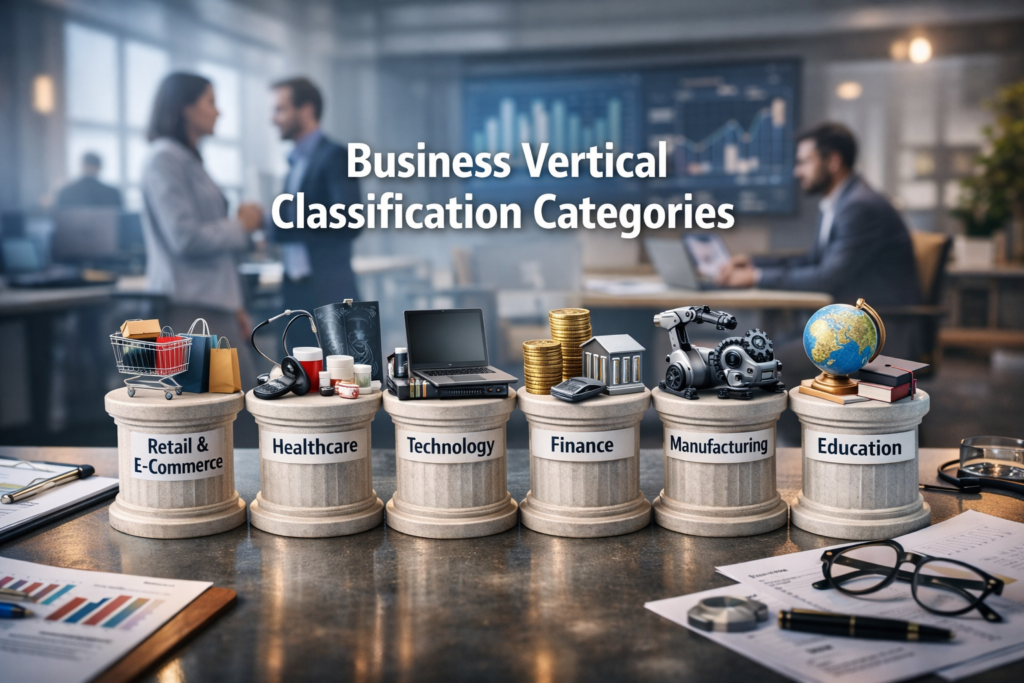
Common Business Vertical Classification Categories
There are several broad categories that businesses fall into, and each category serves as a guideline for segmenting various industries. Understanding these common categories is essential for making informed business decisions. Below are some of the most common business vertical categories:
Retail and E-Commerce
The retail sector includes businesses that sell goods or services directly to consumers. Retail businesses operate through physical stores or online platforms. Examples include fashion stores, grocery chains, and e-commerce giants like Amazon.
Healthcare and Pharmaceuticals
This vertical encompasses healthcare services, medical devices, and pharmaceutical products. Hospitals, clinics, pharmaceutical companies, and medical device manufacturers are all part of this sector.
Technology
Technology includes companies that provide products and services related to computers, software, hardware, and information technology. This includes tech startups, cloud services providers, and cybersecurity firms.
Finance and Banking
This sector includes financial services, including banks, insurance companies, and investment firms. The financial industry is highly regulated and crucial to the global economy.
Key Benefits of Proper Vertical Classification
Proper classification within the right business vertical offers several benefits, ranging from strategic advantages to operational efficiency. Understanding which vertical your business belongs to can provide clarity on how to approach your marketing, target the right customers, and navigate regulatory requirements. Additionally, it helps businesses avoid costly mistakes and legal pitfalls. By categorizing your business in the correct vertical, you can unlock opportunities for:
- Targeted marketing strategies
- Streamlined operations
- Regulatory compliance
- Better partnership and collaboration opportunities
Ensuring that your business fits within the right vertical also helps you position your brand as an industry expert. It can differentiate your business from competitors and enable you to build stronger, more focused relationships with customers and partners.
How to Determine the Right Vertical for Your Business
Determining the correct vertical for your business is a critical step in laying the foundation for your company’s growth. The first step is to assess your product or service offerings and match them with industry categories. Ask yourself questions like: What problem does my business solve? Who is my target audience? Once you have answers to these questions, it becomes easier to categorize your business correctly.
Next, research existing competitors within your industry. Look at how other businesses in your niche categorize themselves. This will give you a better understanding of where your business fits within the broader industry landscape. Additionally, refer to classification systems like the North American Industry Classification System (NAICS) or the Standard Industry Classification (SIC) codes. These systems help categorize businesses into verticals based on their core activities.
Impact of Vertical Classification on Marketing Strategy
Your marketing strategy is heavily influenced by the vertical your business operates in. When you classify your business correctly, you can tailor your messaging, promotional tactics, and customer outreach to suit the preferences of your target audience. For example, marketing efforts for a software company will focus on technology-related content, whereas a clothing retailer will focus more on lifestyle-oriented marketing.
Vertical classification also helps determine where to spend your marketing budget. If your business falls into a highly competitive vertical, you may need to invest more in brand differentiation, while a niche vertical may allow for more targeted and cost-effective campaigns. Overall, proper vertical classification ensures that your marketing efforts are focused and aligned with your business’s unique goals.
How Vertical Classification Affects Operational Efficiency
Understanding your business’s vertical also plays a significant role in enhancing operational efficiency. Each vertical has its unique challenges, supply chain requirements, and customer expectations. By categorizing your business correctly, you can implement best practices specific to your industry.
For instance, a manufacturing company may focus on streamlining production processes, while a financial services firm might prioritize compliance and customer data security. The operational challenges you face will depend on the vertical you belong to, and recognizing this helps you allocate resources more effectively, reduce waste, and improve overall performance.
Compliance and Legal Implications of Business Vertical Classification
Compliance is a significant concern for businesses operating in specific verticals. Every industry has its own set of legal and regulatory requirements. Healthcare companies, for instance, must comply with HIPAA (Health Insurance Portability and Accountability Act) regulations, while financial services businesses must adhere to strict reporting and transparency standards set by regulatory bodies like the SEC.
Incorrectly classifying your business can expose you to legal risks and penalties. For example, a business that mistakenly classifies itself outside the financial sector may fail to comply with industry-specific laws and face fines. Therefore, it is essential to understand the legal frameworks of the vertical you belong to and make sure your business operations align accordingly.
How Proper Vertical Classification Improves Customer Engagement
Customer engagement thrives when businesses understand their industry-specific needs. By correctly categorizing your business, you can focus on building strong, lasting relationships with your target customers. Customers in different verticals have different expectations regarding product quality, delivery methods, and customer service.
For example, the expectations of a customer shopping online for electronics differ from those purchasing groceries in-store. By knowing your vertical, you can optimize your engagement strategies, offering a personalized customer experience that meets the specific needs of your audience. Proper vertical classification also helps you create industry-specific content and resources that resonate with customers, fostering brand loyalty and trust.
Tax Implications of Business Vertical Classification
Taxation is another important aspect influenced by your business’s vertical. Different industries may be subject to different tax codes, deductions, and incentives. For example, technology companies may qualify for R&D tax credits, while retail businesses may receive tax breaks related to inventory management and sales tax exemptions.
Misclassifying your business can result in missed opportunities for tax savings or trigger audits from tax authorities. It’s important to understand how your business vertical affects your tax obligations and to ensure that your business is properly categorized to benefit from available tax incentives and avoid potential penalties.
How to Stay Updated with Changing Business Vertical Classifications
As industries evolve, vertical classifications may also change. New market trends, technologies, and regulations can lead to the creation of new verticals or the merging of existing ones. For example, the rise of artificial intelligence (AI) and machine learning (ML) has created a new vertical for AI-powered solutions, blending the tech and finance sectors.
To stay updated, businesses should regularly review their industry classification. Consulting with industry experts, attending trade shows, and subscribing to industry publications are good ways to keep abreast of changes that could affect your vertical classification. By staying informed, your business can remain adaptable and seize new opportunities as they arise.
Case Studies of Successful Vertical Classification
Tesla – Automotive and Technology
Tesla is a prime example of a company that has successfully leveraged proper vertical classification. Initially classified as an automotive company, Tesla has expanded its market presence by tapping into the renewable energy vertical. By recognizing their involvement in both industries, Tesla has been able to attract diverse investors and grow its brand as a leader in clean energy.
Starbucks – Retail and Food & Beverage
Starbucks categorizes itself within the retail food & beverage vertical, which allows the company to target customers seeking premium coffee. By positioning itself clearly within this vertical, Starbucks has created a strong brand identity, offering high-quality products and customer service tailored to its audience.
Warby Parker – Direct-to-Consumer Retail
Warby Parker, an eyewear brand, disrupted the traditional eyewear industry by positioning itself under the direct-to-consumer retail vertical, offering affordable glasses with a focus on online sales.
How Vertical Classification Helps with Business Growth
Classifying your business correctly within its vertical is key to unlocking new growth opportunities. Vertical classification allows businesses to clearly define their brand, making it easier to target customers, explore new markets, and diversify their offerings.
By aligning your business strategies with the right vertical, you can identify new customer needs and trends. This helps you stay competitive and scale your operations in ways that are tailored to your specific industry. Proper classification also makes it easier to create effective business partnerships, as your business will be recognized as an expert in its field.
Conclusion
understanding and leveraging the right business vertical classification categories is crucial for business success. Proper classification enables businesses to optimize their marketing strategies, streamline operations, ensure regulatory compliance, and engage customers more effectively. As industries evolve, staying updated with vertical classifications allows businesses to remain competitive and uncover new opportunities for growth.
By categorizing your business correctly, you can set the foundation for long-term success and operational excellence. If you haven’t already, take the time to assess where your business fits within the larger industry landscape and leverage this insight to drive your business forward.
Frequently Asked Questions
1. What is the best way to determine my business vertical?
Start by analyzing your product or service and matching it with an industry classification system like NAICS or SIC.
2. Can my business fall into multiple verticals?
Yes, some businesses operate across multiple verticals. In these cases, it’s important to define a primary vertical and target audience.
3. How does vertical classification affect marketing?
It allows businesses to tailor their marketing strategies to specific audiences, increasing relevance and engagement.
4. What are the regulatory implications of business vertical classification?
Each vertical has its own set of regulations. Misclassification can lead to legal issues, penalties, and missed compliance requirements.
5. How do vertical classifications impact taxes?
Different verticals may offer different tax incentives or deductions. Proper classification can help businesses take advantage of these benefits.
6. How often should I reassess my business vertical classification?
Regular reviews are essential, especially if your business diversifies or the industry landscape changes. Staying updated ensures compliance and growth opportunities.
You may also read: Mastering Quizizz Time Limits for Better Learning and Engagement
Hims Stock: The Complete 2026 Investor’s Analysis and Strategic Forecast
For More Information, visit usbizzbuzz
About the Author