

Tiny House Living
Let’s be honest, scrolling through those perfect tiny house photos is dreamy. But what’s it really like? Tiny house living isn’t just a cute trend it’s a hands-on choice to swap square footage for freedom. It’s about less clutter, lighter bills, and a life that happens outdoors more than in. But it’s also about creative storage battles and zoning law headaches. This guide is your friendly, no-fluff look at what it truly takes: the stunning designs that make it work, the real costs, the legal hoops, and the unexpected peace that comes with living with just what you need.
What Is Tiny House Living?
When I first heard “tiny house living,” I pictured just a really small cabin. But it’s so much more than that. It’s a whole mindset. Imagine trading your monthly mortgage anxiety for a space you own outright. Think of the relief of cleaning your entire “house” in 20 minutes flat. It’s a conscious step away from the “buy more, need more” cycle. For most folks, it’s a home under 400 square feet often on wheels that forces you to get clever. But the physical space is just the container. The real magic is the life inside: one focused on experiences, sustainability, and asking, “Do I really need this?” every time you buy something.
The Good, The Bad, and The Cozy: A Balanced Look.
Let’s lay it all out on the table. The pros? They’re powerful. Your utility bills can feel like a pleasant joke. The eco-guilt fades because your carbon footprint shrinks dramatically. There’s a deep, calming clarity that comes from owning only what you love and use. But my friend, the challenges are real. Before the peace comes the purge downsizing is an emotional marathon. Zoning laws can feel like a villainous maze, making it hard to just park your home legally. And yes, you will argue with your partner about the one item clogging the only walkway. It’s a trade: immense freedom for everyday compromise.
Design Sorcery: Making 200 Sq. Ft. Feel Like a Palace.
This is where tiny house living gets fun. It’s a brilliant puzzle. Forget just furniture everything becomes a Swiss Army knife. Stairs are dressers, tables fold into walls, and couches birth guest beds. The goal isn’t to cram stuff in; it’s to design air and flow out.
Huge windows are non-negotiable, borrowing the outside world as your living room wall. Ceilings soar where they can. You create “zones” instead of rooms a sleeping nook here, a kitchen galley there so your brain registers separate spaces. The best designs don’t make you feel like you’re sacrificing; they make you feel like a genius for discovering how little space you actually need to be happy.
Let’s Talk Money: The Real Costs & Savings.
The big question: “Does it actually save money?” The answer is yes, but with a huge asterisk. A beautiful, turn-key tiny house can cost $80,000+. If you DIY, you save a ton but pay with your sweat and time for a year. You’ve got to budget for the trailer, a storm-worthy roof, and proper insulation.
Now, here’s where the smile appears: once you’re in, your monthly bills plummet. We’re talking $30 for electricity, maybe $0 if you’re solar-powered. No giant mortgage. That’s the game-changer. This financial breathing room lets people work less, travel more, or escape debt. You’re not just buying a house; you’re buying a new kind of freedom in your monthly budget.
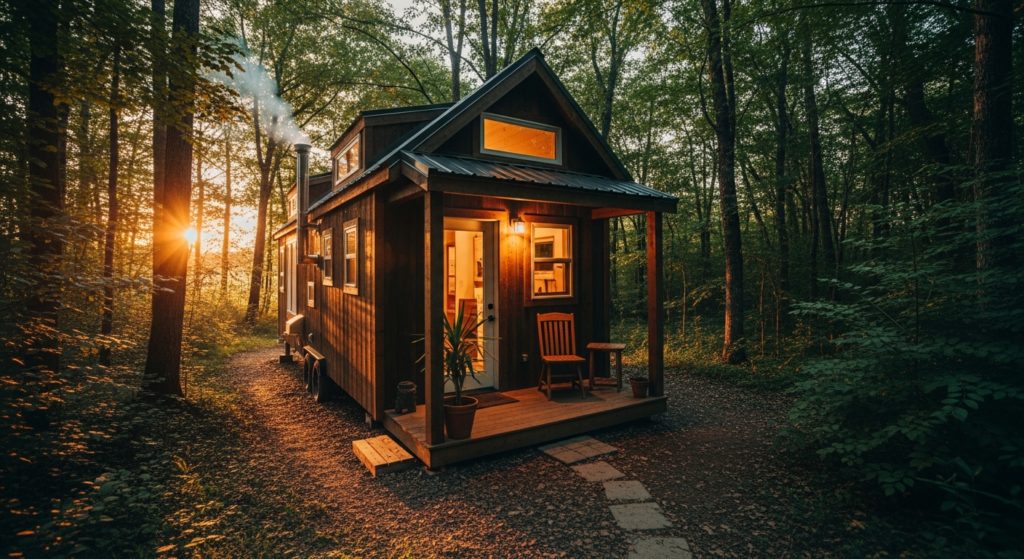
The Rulebook Struggle: Zoning, Codes, and Loopholes.
Alright, let’s tackle the least fun part. Loving tiny house living means becoming a part-time zoning detective. Most city codes weren’t written for a home on wheels. They have rules about minimum square footage (way bigger than yours) and require permanent foundations. This often leaves gorgeous tiny houses in a legal gray area.
Many people start in a friendly rural area, an RV park, or on a generous friend’s land. Some places are adopting “Appendix Q,” a building code for smaller dwellings a huge win! The golden rule? Research first, build second. Call your local planning department and ask direct questions. Your dream home needs a legal place to land.
Going Off-Grid: Unplugging Your Life.
For many, the dream of tiny house living is tied to true independence going off-grid. With such a small space, it’s surprisingly doable. A modest solar panel setup on your roof can power lights, a laptop, and a fridge. You collect rainwater from your metal roof, filter it, and use it for showers and dishes. A composting toilet handles waste without water or plumbing hooks.
You heat with a tiny wood stove or propane. It’s not always glamorous (monitoring your water tank level is a new chore), but the feeling of self-reliance is incredible. You’re not just living small; you’re living smart, directly connected to your resources.
A Day in the Life: Real Stories and Community
It starts with a sunrise you actually see because your wall is mostly window. You make coffee in your galley kitchen where everything is an arm’s reach away. There’s no “cleaning day” you tidy as you go, always. You spend more time on your porch or at a local cafe. It’s a life that pushes you outside.
And you’re never alone in this. The tiny house community is its own wonderful beast. Online forums are lifelines for troubleshooting your plumbing. You meet people at rallies who get it who won’t laugh when you passionately explain your composting toilet. This tribe is a huge part of what makes the lifestyle stick.
Is This Life For You? Ask Yourself These Questions
Before you fall for a Pinterest board, have a brutally honest chat with yourself. Can you truly let go of 80% of your stuff? Are you okay with your kitchen being three steps long? How’s your relationship with whoever you’re living with? (Close quarters amplify everything). Test-drive it: rent one for a week in winter.
Feel what it’s like when you’re stuck inside. Do you have a pragmatic plan for where to put it? This life isn’t an escape from responsibility; it’s an exchange for a different set. But if you crave simplicity, hate waste, and dream of a life where your home serves your life not the other way around then this just might be your path to a surprisingly huge, fulfilling adventure.
Conclusion
Tiny house living isn’t about having less for the sake of less. It’s about making room for more of what actually feeds your soul: more time, more freedom, more connection. It’s a practical, bricks-and-mortar (or rather, wood-and-steel) path to a more intentional life. It asks you to be clever, resilient, and a little brave. But for those who take the leap, the reward is a home that’s not a burden, but a launchpad for the life you truly want to live. Ready to see if your big life fits into a tiny house?
You May Also Like: InternetChicks: The Complete Guide to the Creator Economy’s Power Players
For More Information, visit usbizzbuzz
About the Author


