
Uvlack
In the annals of human innovation, materials have defined epochs the Stone Age, the Bronze Age, the Silicon Age. We now stand at the precipice of a new era, ushered in not by a substance that merely is, but by one that responds. Enter Uvlack, a meta-material so revolutionary it challenges our fundamental understanding of color, energy, and interaction with the electromagnetic spectrum.
More than a coating or a pigment, Uvlack is a dynamic interface between our world and the light that illuminates it. This is not just an evolution in material science; it is a paradigm shift poised to transform industries, reshape our environmental footprint, and redefine the built environment.
The History and Evolution of Uvlack: From Lab Curiosity to Industrial Marvel
The story of Uvlack begins not with a eureka moment, but with a persistent challenge: how to achieve perfect, controllable darkness. For centuries, the quest for a “blacker black” drove artistic and scientific pursuits, from Vantablack’s nanotube forests to singularities in space. Uvlack’s genesis, however, was different. In the early 2020s, research teams at several institutions, notably the Advanced Photonics Collective and the Institute for Nanoscale Engineering, were independently exploring meta-materials artificially engineered structures with properties not found in nature.
The initial goal was modest: create a surface that could dynamically manage thermal load in satellites by adjusting its absorption of infrared radiation. Early prototypes, reliant on micro-electromechanical systems (MEMS), were clunky, slow, and prone to failure. The pivotal breakthrough came in 2028, when a team led by Dr. Elara Vance successfully demonstrated a phase-changing plasmonic lattice. Instead of moving parts, this lattice used nanoscale pillars of a chalcogenide alloy. When stimulated by a small electrical pulse, these pillars could switch their atomic arrangement, drastically altering their resonant frequency and, consequently, which wavelengths of light they absorbed or reflected.
This was the birth of the first true Uvlack matrix. The name, a fusion of UV (Ultraviolet) and Black, was coined to describe its initial capability to appear pitch black while selectively filtering harmful UV rays. However, engineers quickly realized its tunability spanned far beyond.
The evolution can be charted in three distinct generations:
- Generation 1 (The Static Black – ~2029-2035): Focused on perfecting the spectral absorption profile. These were essentially “super-blacks” with embedded, switchable bands for thermal management. Primary applications were in high-value aerospace and telescope interiors.
- Generation 2 (The Dynamic Interface – ~2035-2045): Integration with IoT and AI systems. Uvlack surfaces became addressable pixels. A building façade could now be a massive, low-resolution display for energy management, changing its properties panel-by-panel based on the sun’s azimuth. This era saw its entry into architecture and automotive sectors.
- Generation 3 (The Energy-Aware Skin – ~2045-Present): The current generation incorporates photonic energy harvesting. Uvlack doesn’t just manage light and heat; it scavenges a portion of that energy to power its own control systems or feed it back into a microgrid. It has evolved from a passive/active material to a semi-autonomous, energy-positive surface.
Revolutionary Features of Uvlack Technology: Deconstructing the Genius
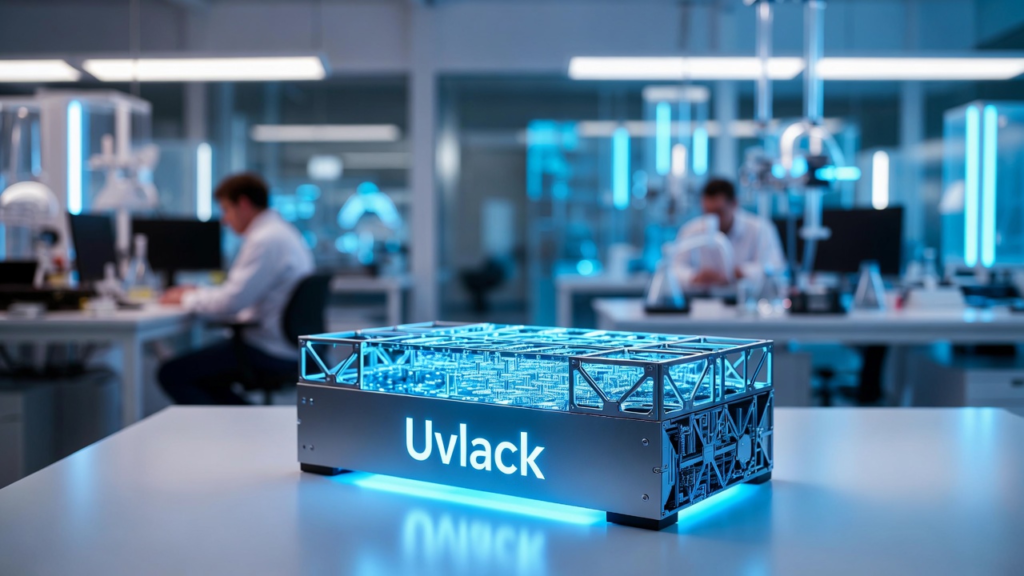
To understand Uvlack’s impact, one must comprehend its core technological pillars. It is not a paint; it is a complex, nano-engineered system.
- Spectrum-Specific, Real-Time Tunability: This is Uvlack’s cornerstone feature. Imagine a surface that, to your eye, is a perfect matte black. Yet, through digital control, it can be absorbing 99.97% of visible light while reflecting 90% of mid-infrared heat. Moments later, it could switch to transparent in the far-infrared spectrum to radiate heat away. This precise, wavelength-by-wavelength control is managed via a cloud of electrons in the meta-material lattice, manipulated by voltage or thermal inputs.
- The Phase-Change Mechanism: At the heart of Uvlack lies a Ge₂Sb₂Te₅ (GST) or similar chalcogenide alloy nanostructure. In its amorphous phase, the material absorbs broadly. A controlled electrical pulse crystallizes specific regions of the lattice, turning them reflective at targeted frequencies. This switch is incredibly fast (nanoseconds) and reversible millions of times.
- Energy Harvesting & Photonic Integration: Third-gen Uvlack incorporates microscopic rectenna arrays (rectifying antennas) alongside the lattice. Non-visible light wavelengths (like infrared) absorbed by the material induce a current in these antennas, converting waste thermal radiation into usable electricity with low, but meaningful, efficiency (~5-8%).
- Data Connectivity and AI Synergy: Each Uvlack module contains a simple micro-controller and can be networked. When integrated with building or vehicle management AI, it becomes predictive. It doesn’t just react to the sun’s current position; it anticipates it, along with weather patterns and occupancy schedules, to optimize for comfort and energy savings autonomously.
Benefits of Using Uvlack Across Key Industries
Uvlack’s tunability makes it a cross-industry disruptor.
- Architecture & The Built Environment (The “Dynamic Envelope”):
- Energy Efficiency: Uvlack-enabled building skins can reduce HVAC energy loads by an estimated 30-45%. In summer, it reflects infrared, keeping buildings cool. In winter, it absorbs broad-spectrum sunlight to warm exterior walls, reducing heating demand.
- Adaptive Comfort: Smart windows with Uvlack interlayers eliminate glare without darkening the view, maintaining natural light while boosting productivity. They can also provide dynamic privacy, turning opaque at the flick of a switch.
- Urban Heat Island Mitigation: Widespread use on roofs and pavements can cool entire city districts by reflecting excess heat back into space, a critical tool for climate change adaptation.
- Transportation (The “Thermal Stealth” Layer):
- Electric Vehicles (EVs): Cabin cooling is a major drain on EV batteries. Uvlack on the roof and windows can maintain a stable cabin temperature with minimal energy use, directly extending range. It also manages battery pack temperature for optimal performance and longevity.
- Aerospace: For satellites and spacecraft, Uvlack is a thermal control engineer’s dream. It provides adaptive multi-spectral camouflage and protects sensitive instruments from solar radiation while managing internal heat dissipation without heavy, mechanical louvers.
- Renewable Energy (The “Efficiency Multiplier”):
- Solar Photovoltaics (PV): Solar panels lose efficiency as they heat up. Uvlack backing can actively cool panels by emitting infrared radiation, boosting power output by 10-15% during peak sun. Its anti-reflective properties in the PV-active spectrum also capture more light.
- Concentrated Solar Power (CSP): It can be used on receiver towers to maximize absorption of focused sunlight while minimizing re-radiation losses.
- Consumer Electronics & Appliances:
- Devices can manage internal heat more effectively, preventing throttling and extending component life. Exteriors can remain cool to the touch. Screens on devices become universally readable in any lighting condition.
- Healthcare & Scientific Instruments:
- Used in enclosures for MRI machines and sensitive microscopes to eliminate stray electromagnetic interference and light pollution. It creates the perfect, stable environment for precision measurement.
Potential Impact on Society and the Environment: A Double-Edged Sword?
The macro-level impacts of Uvlack are profound and multifaceted.
- Environmental Impact (The Bright Side): Its most significant contribution is the potential for massive decarbonization. By drastically slashing energy demand for heating and cooling in buildings which accounts for nearly 40% of global carbon emissions Uvlack could be a key player in meeting climate targets. Furthermore, by boosting renewable energy efficiency, it accelerates the ROI of solar power, making it more competitive.
- Societal & Economic Impact: It promises lower energy bills, increased energy independence for households and nations, and more resilient infrastructure in the face of extreme heat waves. It could also spawn entirely new fields in adaptive architecture and photonics engineering. However, this technological leap risks exacerbating a “digital divide” in infrastructure, where only wealthy communities or nations can afford the initial investment for these smart environments.
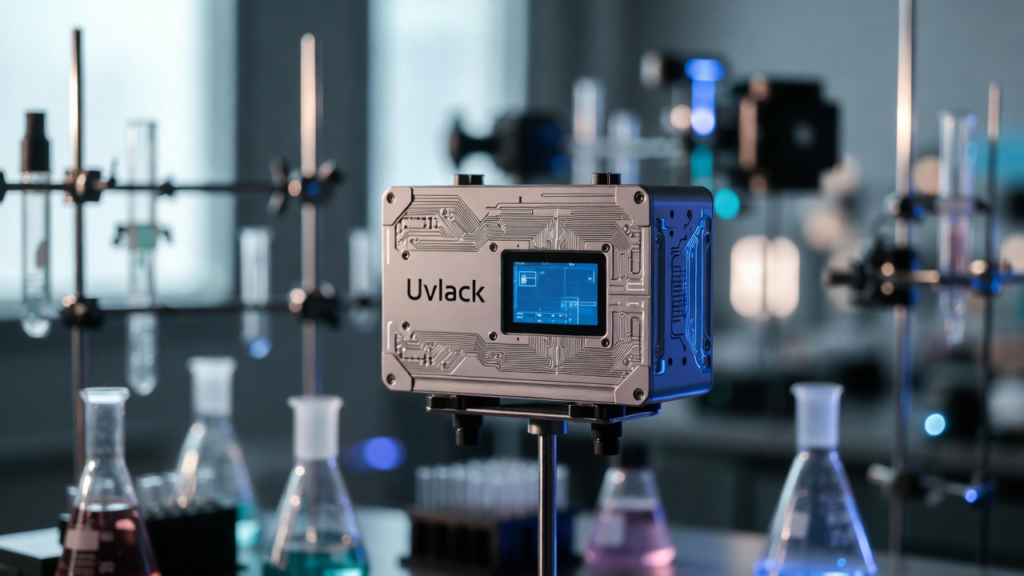
Challenges and Controversies Surrounding Uvlack
No transformative technology arrives without significant hurdles and debates.
- The Cost Barrier: Nano-fabrication remains expensive. While costs are dropping (following a Swanson’s Law-type curve similar to solar), widespread adoption in residential construction is still 5-10 years away. The initial CAPEX is high, though the TCO (Total Cost of Ownership) is favorable.
- Material Security & Hacking: A Uvlack-coated smart city is a networked city. The surface becomes a cyber-physical attack vector. A coordinated hack could force all buildings in a financial district to absorb maximum heat during a summer blackout, causing system failures and endangering health. Robust, quantum-resistant encryption for material control systems is non-negotiable.
- E-Waste and Circularity: Current Uvlack matrices are complex laminates of rare metals, semiconductors, and plastics. Recycling them is a monumental, unsolved challenge. Without a clear “cradle-to-cradle” lifecycle plan, we risk creating a future wave of sophisticated, non-biodegradable e-waste.
- Aesthetic and Psychological Concerns: Some architects and psychologists question the ethical implications of a fully tunable exterior. Does the constant, subtle shifting of a building’s thermal “mood” have subconscious effects? Furthermore, does it encourage further separation from the natural environment by creating a perfect, artificial bubble?
Future Outlook and Possibilities: The Next Frontier
Uvlack is not the end state; it is a foundational platform. The future roadmap is breathtaking:
- Bio-Integrated Uvlack: Research is underway on organic, peptide-based meta-materials that mimic the adaptive color-changing abilities of cephalopod skin. This could lead to biodegradable, self-repairing Uvlack for short-lifecycle consumer goods.
- Full-Spectrum Adaptive Camouflage: Military and wildlife observation applications are pushing Uvlack towards not just spectral, but spatial adaptation mimicking patterns and textures in real-time, effectively creating an invisibility cloak for specific sensor bands.
- Uvlack in Agriculture: Greenhouses coated with Uvlack could optimize light spectra for different crop growth stages, blocking pests’ visual cues while transmitting ideal photosynthesis wavelengths, boosting yield with less energy.
- The Personal Environment: The ultimate application may be wearable. Imagine a Uvlack-lined jacket that is breathable in summer heat, insulating in winter cold, and charges your phone from your own body heat and ambient light.
Embracing a Brighter (and Cooler) Tomorrow with Uvlack
Adopting Uvlack is more than a technical upgrade; it is a philosophical commitment to adaptive resilience. It represents a move away from brute-force climate control (heating the outside in winter, cooling it in summer) towards a harmonious, dynamic negotiation with our environment. To embrace it wisely, we must pair innovation with responsibility: investing in green chemistry for sustainable production, mandating open-security standards, and developing policies that ensure its benefits are equitably distributed.
Conclusion
Uvlack stands as a testament to human ingenuity, a material that has woven together threads from photonics, nanotechnology, and data science to create something entirely new. It transcends its name, evolving from a UV-managing black surface into the very skin of a responsive planet. The challenges it presents in cost, security, and sustainability are significant but not insurmountable.
They are the growing pains of a technology that holds the key to unlocking unprecedented energy efficiency, environmental stewardship, and design freedom. As we refine its chemistry, harden its cyber-defenses, and integrate it into our lives, we are not just applying a smart coating.
We are learning to converse with light itself, and in that dialogue, we are building a future that is smarter, more efficient, and profoundly more attuned to the world we inhabit. The age of static materials is fading; the dynamic, intelligent era of Uvlack has dawned.
Frequently Asked Questions (FAQs)
1. What is Uvlack and how does it work?
Uvlack is an advanced, nano-engineered smart meta-material. It works by using a tunable plasmonic lattice at the nanoscale. When stimulated by a small electrical signal, this lattice can change its phase, allowing it to dynamically absorb, reflect, or transmit specific wavelengths of light (from UV to infrared) while maintaining a uniform black appearance to the human eye.
2. What are the main benefits of using Uvlack?
The primary benefits are unprecedented energy efficiency and adaptive environmental control. Uvlack can reduce building HVAC energy use by 30-45%, extend electric vehicle range by managing cabin temperature, boost solar panel efficiency by preventing overheating, and eliminate screen glare on electronics all through its dynamic, spectrum-specific modulation.
3. How is Uvlack different from traditional coatings like Vantablack?
Unlike passive super-blacks like Vantablack, which are statically absorptive, Uvlack is an active, tunable system. Vantablack is famously one of the darkest substances, absorbing over 99.96% of light, but its properties are fixed. Uvlack can switch its absorption profile in real-time, becoming reflective or transparent to selected wavelengths on command, making it a multi-functional smart material.
4. Is Uvlack environmentally friendly?
Uvlack has a dual environmental impact. Its application dramatically reduces operational carbon emissions by cutting energy consumption. However, challenges remain in its lifecycle. Current versions use rare elements and complex laminates, making recycling difficult. Next-gen research is focused on organic, biodegradable formulations to improve its full-circle sustainability.
5. Where is Uvlack currently being used or developed?
Currently, Uvlack is deployed in high-value sectors where its cost is justified by performance gains. These include aerospace for satellite thermal management, premium automotive (especially EVs), cutting-edge architectural projects as “dynamic façades,” and specialized renewable energy installations. Widespread consumer and residential adoption is anticipated within the next decade as production costs decrease.
You May Also Like: Decoding 48ft3ajx: The Mysterious Code Exposing Cosmetic Industry Shadows
For More Information, visit usbizzbuzz
About the Author